Class: QgsTabPositionWidget
A widget for configuring QgsTextFormat tab positions.
Added in version 3.42.
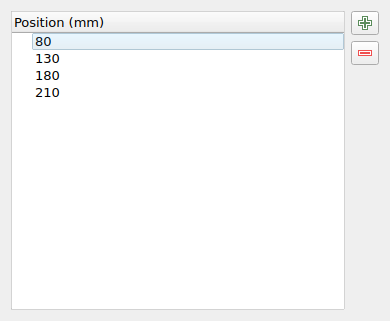
QgsTabPositionWidget
List of all members, including inherited members
Class Hierarchy
Base classes
Base class for any widget that can be shown as an inline panel. |
|
Constructor
Methods
Returns the tab positions defined in the widget. |
|
Sets the tab positions to show in the widget. |
|
Sets the unit type used for the tab positions (used to update interface labels). |
Signals
Emitted when positions are changed in the widget. |
- class qgis.gui.QgsTabPositionWidget[source]
Bases:
QgsPanelWidget- __init__(parent: QWidget | None = None)
Constructor for QgsTabPositionWidget, with the specified
parentwidget- Parameters:
parent (Optional[QWidget] = None)
- positions(self) list[QgsTextFormat.Tab]
Returns the tab positions defined in the widget.
See also
- Return type:
list[QgsTextFormat.Tab]
- signal positionsChanged(positions: List[QgsTextFormat.Tab])[source]
Emitted when positions are changed in the widget.
- Parameters:
positions (List[QgsTextFormat.Tab])
- setPositions(self, positions: Iterable[QgsTextFormat.Tab])[source]
Sets the tab
positionsto show in the widget.See also
- Parameters:
positions (Iterable[QgsTextFormat.Tab])
- setUnit(self, unit: Qgis.RenderUnit)[source]
Sets the unit type used for the tab positions (used to update interface labels).
- Parameters:
unit (Qgis.RenderUnit)