Class: QgsGraduatedHistogramWidget
Graphical histogram for displaying distribution of field values and
editing range breaks for a QgsGraduatedSymbolRenderer
renderer.
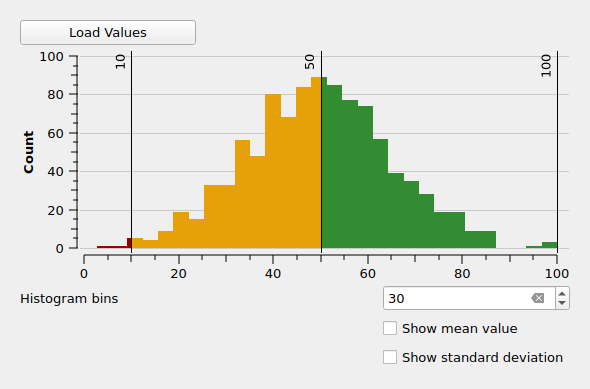
QgsGraduatedHistogramWidget showing a normally distributed histogram
List of all members, including inherited members
Class Hierarchy
Base classes
Graphical histogram for displaying distributions of field values. |
|
Constructor
Methods
Sets the |
Signals
Emitted when the user modifies the graduated ranges using the histogram widget. |
- class qgis.gui.QgsGraduatedHistogramWidget[source]
Bases:
QgsHistogramWidget- __init__(parent: QWidget | None = None)
QgsGraduatedHistogramWidget constructor
- Parameters:
parent (Optional[QWidget] = None) – parent widget
- signal rangesModified(rangesAdded: bool)[source]
Emitted when the user modifies the graduated ranges using the histogram widget.
- Parameters:
rangesAdded (bool) –
Trueif the user has added ranges,Falseif the user has just modified existing range breaks
- setRenderer(self, renderer: QgsGraduatedSymbolRenderer | None)[source]
Sets the
QgsGraduatedSymbolRendererrenderer associated with the histogram. The histogram will fetch the ranges from the renderer before every refresh.- Parameters:
renderer (Optional[QgsGraduatedSymbolRenderer]) – associated
QgsGraduatedSymbolRenderer